How to create an english QR menu for an italian restaurant
A practical guide for Italian restaurants that need an English QR menu for tourists: what to translate, how to handle EU allergens, when AI translation helps and how Stello fits.


To create an English QR menu for an Italian restaurant, start with the current Italian menu, keep recognizable dish names, and add clear English descriptions. Check ingredients, prices and allergen information, then publish the menu at a stable URL and test the QR code on a phone.
The steps below cover the first English version and the checks to repeat when a recipe changes. The translation examples are editorial suggestions, not verified recipes or a real restaurant menu.
A practical workflow
- Prepare the Italian source. Check dish names, prices, categories and ingredients against the menu currently being served. Remove unavailable dishes and outdated descriptions.
- Decide what stays in Italian. Keep traditional names where they help identify the dish; explain ingredients and preparation in English underneath.
- Check allergen information. Use the actual recipe and supplier information. Resolve missing information before publishing the translated menu.
- Write or generate the English version. Use short descriptions, then review regional terms and service notes. Compare each translated entry with its Italian source.
- Publish and test. Open the printed QR code on a phone, switch between Italian and English, and check prices, readability and allergen information. After a menu update, scan the same QR again to confirm it reaches the current version.
Assign one person to approve the English text before it goes live. A useful handover records the dish, the change, the reviewer and the date. This makes a later ingredient substitution easier to trace.
Do not translate every dish name literally
Keep a recognizable Italian dish name and add an explanation that matches the recipe. A regional name on its own may leave the guest guessing; replacing it with a broad English name may lose useful detail.
| Italian term | Suggested English wording | Check before publishing |
|---|---|---|
| Antipasti | Starters | Explain whether a plate is for one person or for sharing. |
| Primi piatti | Pasta and risotto, if those are the dishes listed | Adapt the heading if the section also includes soups or other dishes. |
| Contorni | Side dishes | Make clear whether sides are included or priced separately. |
| Piatti stagionali | Seasonal dishes | Name the actual seasonal ingredients in each description. |
| Guanciale | Cured pork cheek | Check the ingredient actually used; do not describe a substitute as guanciale. |
| Fritto misto | Mixed fried seafood, for a seafood version | List the actual seafood; other versions may contain meat or vegetables. |
| Coperto | Cover charge | State the actual amount and what the restaurant includes, without implying that it is a tip. |
These are wording options, not fixed translations for every menu. For example, “seasonal dishes” explains piatti stagionali, but the individual entries still need descriptions. The dictionary definition of guanciale identifies it as a cured pork product from the cheek or jowl.
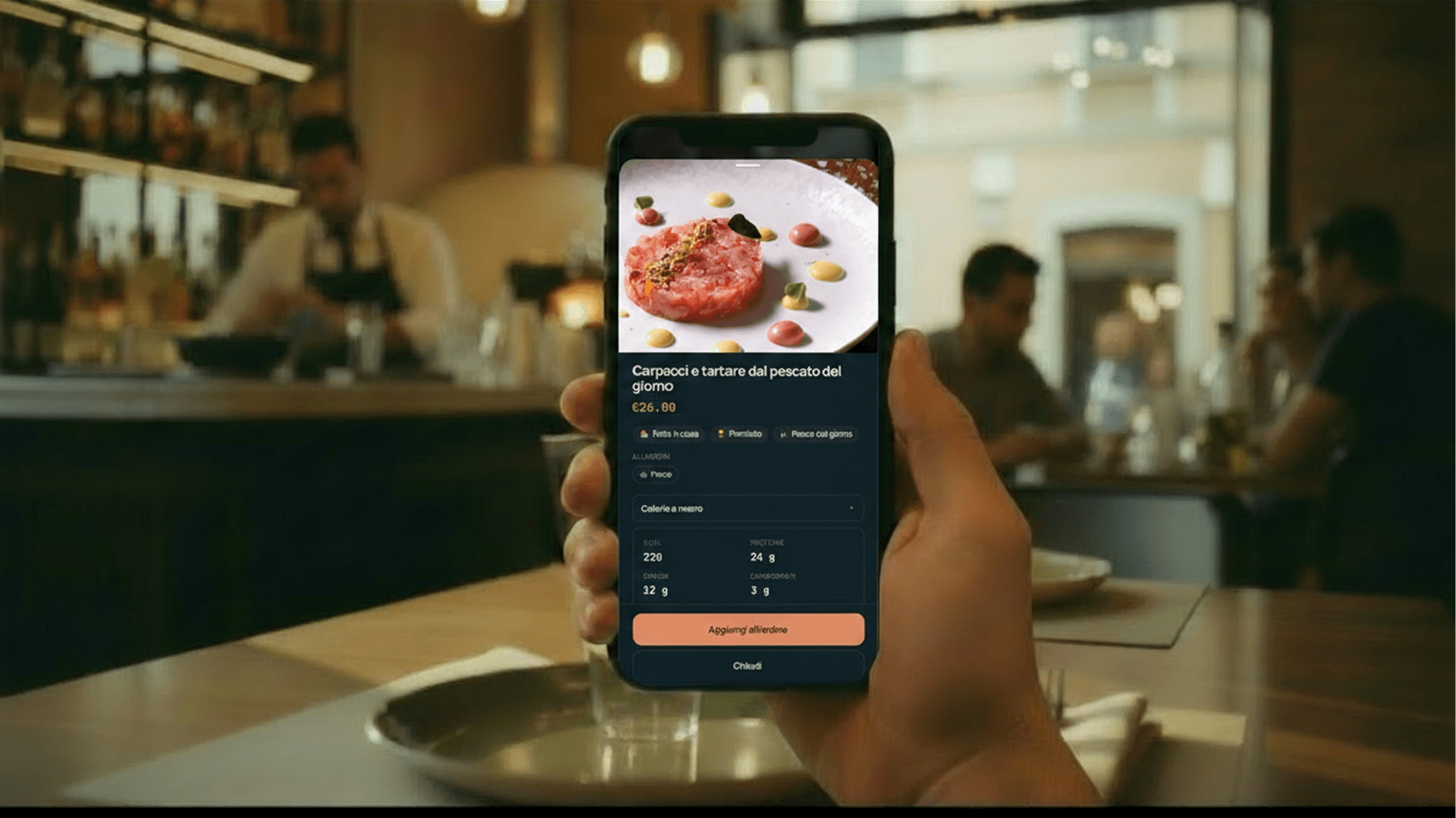
Example: an English dish card
The following is a fictional layout example. The EUR 14 price and the recipe are illustrative; replace them with the restaurant's own information.
Spaghetti alla carbonara — EUR 14
Spaghetti with egg, pecorino cheese, guanciale (cured pork cheek) and black pepper.
Allergen field to complete before publication: enter the verified allergen information from the actual pasta, cheese, cured meat and any other ingredients used. For this example, wheat, egg and milk are checks to resolve, not a complete allergen declaration. Do not publish this unfinished field or infer “gluten-free” from a translation.
When reviewing the card, compare the English description with the kitchen's recipe. If the recipe uses a different cheese or cured meat, change the description accordingly. Keep the price and portion information consistent across language versions.
What an English QR menu should include
A useful English menu needs more than translated dish names. It should explain the things a tourist uses to make a decision at the table.
Translate or clarify:
- menu categories, such as starters, pasta, pizza, mains, desserts and drinks;
- main ingredients in each dish;
- cooking method when it matters, such as raw, grilled, fried, baked or slow-cooked;
- spice level, especially for dishes with chili or pepper;
- portion logic, such as sharing plates, side dishes or tasting menus;
- dietary markers, such as vegetarian, vegan or gluten-free when verified;
- EU allergen information;
- service notes that affect expectations, such as cover charge, bread or table service.
Descriptions should make relevant ingredients clear, including pork or raw fish where present. Keep allergen information easy to find and tied to the actual recipe.
Allergens are not optional
Restaurants in the EU must provide information on allergens in non-prepacked food. The European Commission explains the food-information framework.
For Italy, FIPE explains the permitted information formats, including menus, registers and digital systems. When digital systems are used, written documentation must also be readily available to customers and inspectors. Placing information close to each dish is a useful design choice, not the only permitted format.
Check the source information against recipes and suppliers before translating it. A readable English label cannot correct an inaccurate ingredient record. For an Italian-language worksheet, see our allergen guide and blank table.
When AI translation helps
AI translation is useful when the restaurant has many dishes, frequent menu changes or multiple tourist languages to support. It can create a first version quickly, especially for simple ingredient-based descriptions.
It works best when the menu content is structured. A dish with name, description, ingredients, allergens and category is easier to translate well than a messy PDF with inconsistent formatting. The cleaner the source menu, the better the translation output.
AI translation should still be reviewed. Restaurant menus contain regional terms, brand names, wine descriptions, protected food names and local expressions. The owner or manager should check the final English version for meaning, not just grammar.
Keep an approved copy of the source and review any translated entries affected by later recipe changes.
Choosing a web menu or an English PDF
A readable PDF can work for a short, infrequently changed menu. Test the actual file on a phone: small text, large downloads and awkward page layouts make some PDFs difficult to use during a meal.
A web menu gives you another way to organize sections, descriptions and language versions for a small screen. Choose based on how often you update the menu and what guests need to read.
Both formats can use a stable QR destination. A PDF does not inherently require a new QR code after every edit: that depends on whether its URL changes. For either format, scan the printed code after an update and check that it opens the intended version.
Where Stello fits
Stello is a good fit when the restaurant wants to improve the menu itself without adopting a full POS, order-and-pay or kitchen workflow platform.
The free plan supports a QR menu and two languages; Base adds AI translation in 15 languages. Review the translated content before publishing and check the current translation features and plan details when choosing a setup.
If the restaurant also needs table ordering, payments, POS, kitchen display or delivery workflows, compare those requirements separately. For the broader market overview, use our guide to digital menu platforms in Italy. For a specific comparison, see our Qromo comparison. For the narrower menu-focused shortlist, see QR menu software in Italy without POS or pay-at-table complexity.
Common mistakes to avoid
Before sharing the menu, look for these problems:
- A dish name translated so broadly that the guest cannot recognize the original.
- Ingredients in the English text that do not appear in the current recipe.
- Allergen information missing, outdated or difficult to find.
- A printed QR code that opens an older file or the wrong language version.
- Different prices or portion descriptions in the Italian and English entries.
Repeat these checks when ingredients or suppliers change, not only at the first launch.
FAQ
What is the best way to translate an Italian restaurant menu into English?
Keep the Italian dish names where they are meaningful and add clear English descriptions. Translate ingredients, cooking method, allergen information and service notes. Use AI translation to speed up the first version, but review regional dishes and allergen details manually.
Should an Italian restaurant use a PDF or a QR menu for English translations?
A QR code can open either a PDF or a web menu. Choose a format that is readable on a phone and easy for the restaurant to maintain. Keep the destination URL stable and test it after changes.
Can AI translate a restaurant menu safely?
AI can help create the first translation, but the restaurant should review the result before publishing. This is especially important for allergens, regional ingredients, protected food names, pork, shellfish, dairy, gluten and dishes with raw or spicy elements.
What languages should a tourist restaurant in Italy add after English?
It depends on the city and guest mix. German, French, Spanish, Dutch, Chinese or Japanese can matter in different areas. English is often the first step because it helps many international guests even when it is not their native language.
Catering for international groups
Planning catering for an international group? Our catering menu examples and editable template (in Italian) include a sample dish description in Italian, English and French.
Sources and related guides
Content reviewed: September 10, 2026. This guide is published by Stello; product references are vendor information. Translation examples are editorial suggestions to adapt to the restaurant's actual recipes.